

Welcome to Girl Culture, the newsletter where Caroline Siede examines pop culture, feminism, and more. This post is free but to get the full Girl Culture experience—including my rom-com column and my Disney princess series—you can become a paid subscriber.
To mangle a Howard Hawks quote, if a movie has four great scenes and 10 unwatchable ones, does that make it a good movie? Probably not, but it’s harder to write off than a complete trainwreck, and that’s the conundrum I’m stuck in with DC’s big summer blockbuster Supergirl. There’s enough in it that doesn’t work that it’s hard to recommend and yet just enough to chew on that it’s hard to entirely dismiss either. If the problem with the 1984 Supergirl movie is that it’s a boring failure, this one comes closer to being an interesting mess. Unfortunately, that’s a pretty low bar for a movie meant to be the second support column of an entire cinematic universe.
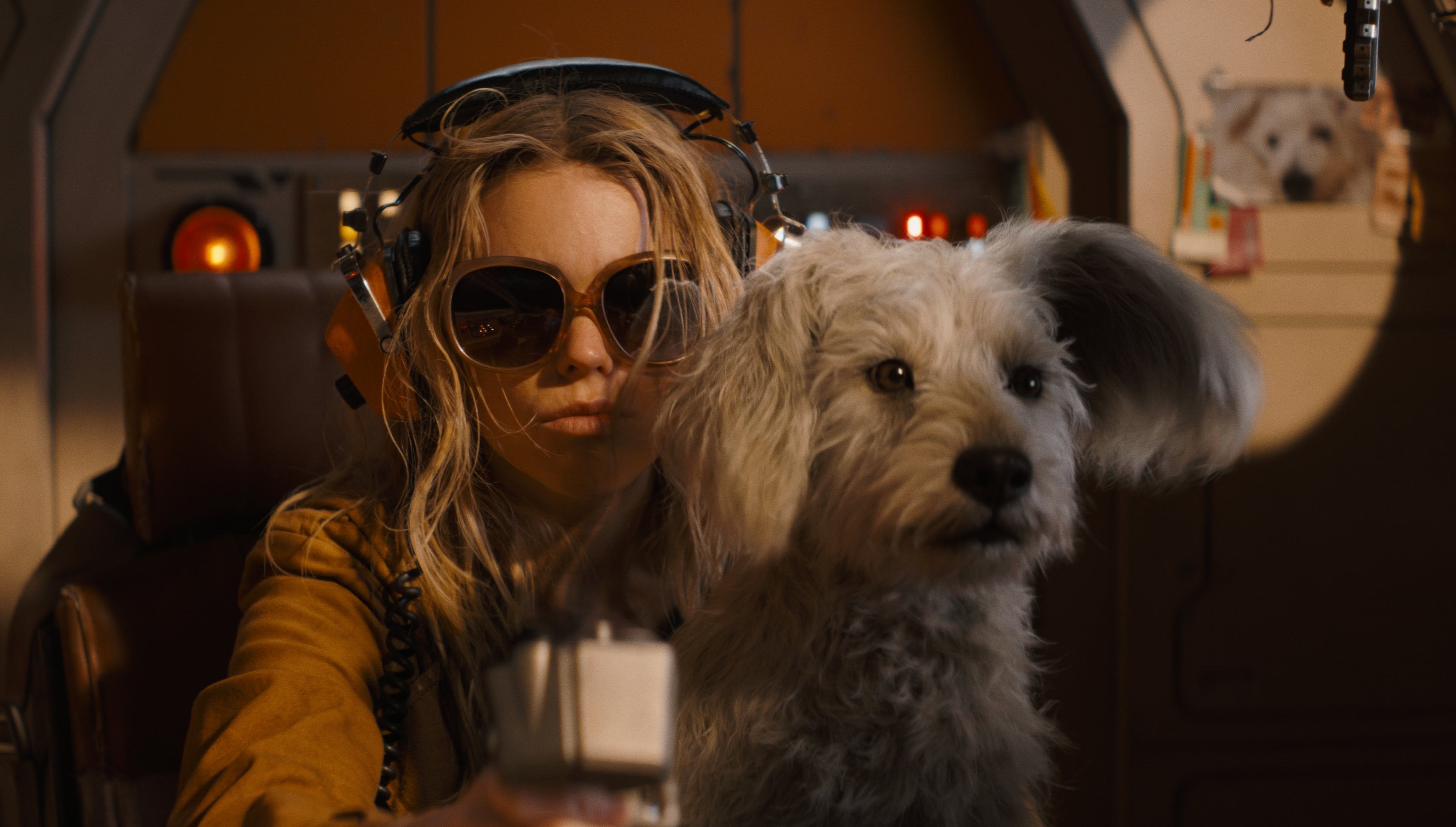
If you squint, you can sort of see what director Craig Gillespie, screenwriter Ana Nogueira, and new DCU head honcho James Gunn were trying to do here. Last summer, Gunn’s new big screen take on Superman returned the Man of Steel to the sort of sunny, cheery tone that was missing from the Zack Snyder version. Now Supergirl is meant to offer a darker flipside to all that boy scout optimism. Unlike her more famous cousin, Kara Zor-El (Milly Alcock) didn’t escape the destruction of Krypton as a baby, she bore witness to it until she was finally shipped off to Earth in her teenage years. That’s left her with a severe case of depression and PTSD, which she tries to drown out by day drinking her way across the universe with her trusty canine pal Krypto by her side. She’s not an antihero, exactly, but, as she puts it, if Clark sees the good in people, she sees the truth.
It’s an intriguing set-up, although the film’s first big problem is that it can’t decide if Kara is its protagonist or if that role actually belongs to Ruthye Marye Knoll (Eve Ridley), a young girl whose family is slain by the villainous Krem (Matthias Schoenaerts) and who decides to True Grit-style recruit someone to help her track him down and kill him. We open on Kara in a way that makes Ruthye feel like a supporting player in her story. Yet we don’t actually learn the details of Kara’s rather complicated backstory until Ruthye does, which makes it hard to feel like we’re truly locked into the headspace of either female lead. It leaves both characters—and their relationship to one another—feeling underbaked when that should be the heart of the movie.

Instead, the bulk of Supergirl’s runtime is devoted to space chaos. Imagine the Taserface portions of Guardians of the Galaxy Vol. 2 extended into a full feature, only instead of offsetting that with the delights of Baby Groot you have to watch Jason Momoa give the single most embarrassing performance of his career as Lobo, a cigar-chomping, motorcycle-driving bounty hunter who mostly seems to be here because someone at DC decided boys won’t come see this movie unless there’s a Strong Male Character in it.
Like Gunn’s Superman, Supergirl skips over all the traditional origin story beats in order to drop you directly into an overstuffed comic book universe filled with supporting players who pull focus without ever being all that entertaining. (Krem and his crew are exhausting.) It also maintains and heightens that film’s belief that Kryptonians are only interesting if they’re weak and de-powered and spends most of its runtime finding elaborate reasons for Kara to be reduced to a vaguely strong martial artist who can kind of fly. Unlike Gunn’s colorful take on Supes, however, Gillespie’s filmmaking is sludgy and flat—like if Mad Max: Fury Road were entirely filmed inside The Volume or Atomic Blonde forgot to light the set (or hire an action choreographer).
And yet, for all those considerable flaws, there’s still something about this messy, drunken, angry, resentful version of Kara that’s kind of compelling too. It’s not exactly a new archetype for the superhero genre given that Margot Robbie in Birds of Prey and Florence Pugh in Thunderbolts covered similar ground in much better movies, but Alcock effectively conveys just how young Kara is in a way that makes her story feel particularly haunting. Supergirl pushes its PG-13 rating as close to an R as it can get with grim acts of violence against dogs and children that only seem to support Kara’s nihilistic view on life. Yet, despite it all, she’s still instinctively pulled to do the right thing—even when the right thing means taking on trauma herself so someone else doesn’t have to bear it.
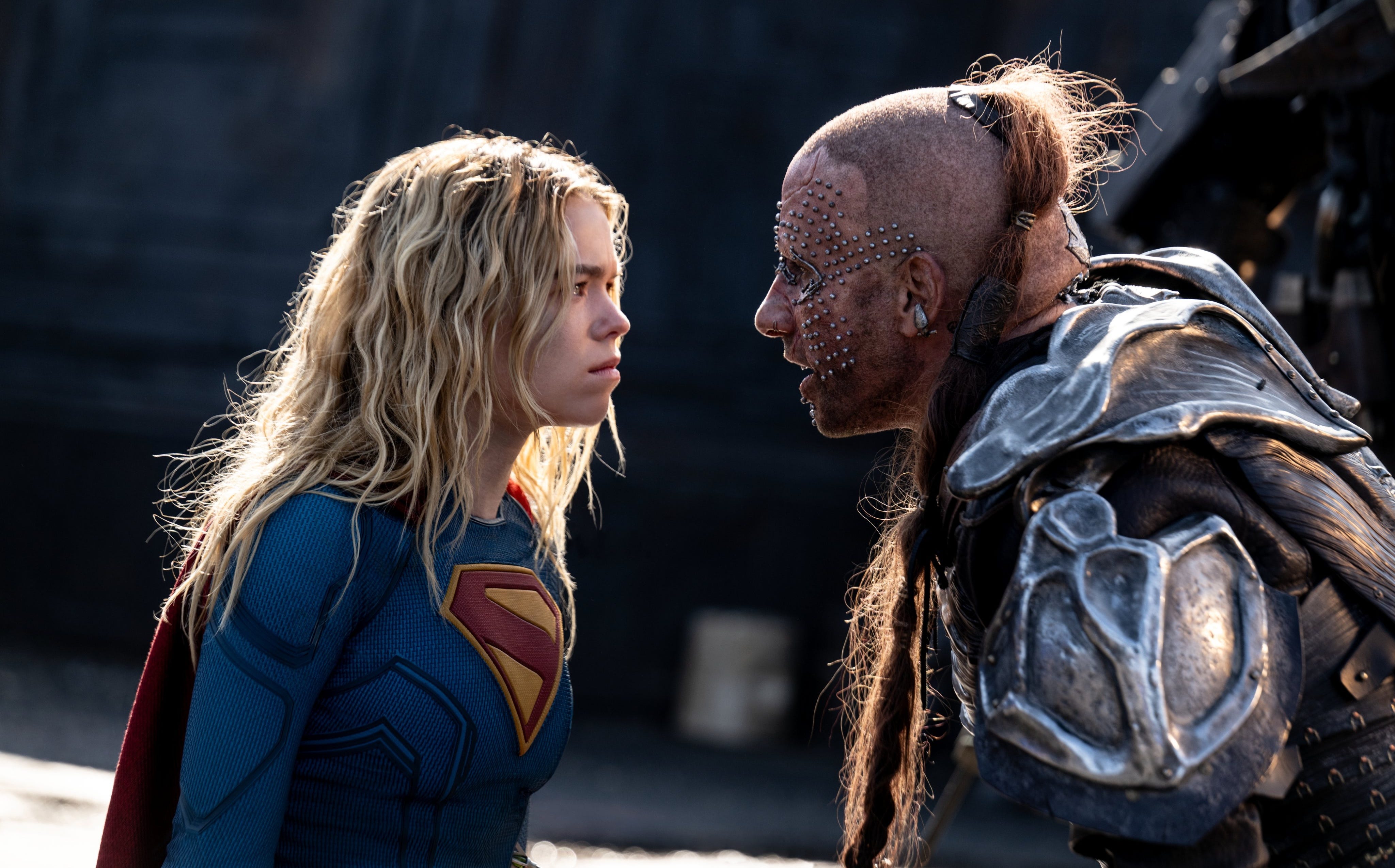
Given how perfectly Melissa Benoist nailed the inspiring coming-of-age version of the Girl of Steel over on The CW, it’s smart for the film to swerve in a different direction. (Although I fear for parents bringing young children to this one.) While Alcock isn’t quite allowed to show her range here the way she did on House of the Dragon, that’s more a problem with the screenplay and editing than her performance. Very basic questions about Kara’s backstory are left unanswered and the filmmakers clearly couldn’t decide whether they wanted to make a story about Kara establishing a found family in space or learning to embrace her role as a hero on Earth. Still, Alcock provides a solid, likeable center to the chaos and somehow manages to do her best acting in subtitled Kryptonese.
In fact, there are ideas in this movie that are among the most interesting a live action superhero movie has attempted to tackle—particularly when it comes to questions about revenge and redemption; pain and healing. In that sense, Supergirl may wind up sticking with me more than Superman did, even if I slightly prefer that film to this one. Overall, however, there’s a sense that Gunn’s DCU is trying to do too much too fast without building its foundation first. As with last summer’s Supes story, Supergirl wants to soar without taking the time to learn to fly.
Grade: C
You can read more of my thoughts in my A.V. Club essays “Did Supergirl earn its ending?” and “The Supergirl movie didn’t need Lobo”
Girl Culture is a fully reader-supported publication. To receive new posts and support a female film & TV critic, consider becoming a free or paid subscriber. Or if that’s not your thing, you can also make a one-time donation.


Agreed. I did not expect them to fully hone in on the comic (WOT) and I was fine with this, but with this trade off, I was expecting the film itself to at least be more fun for fun self. Like lean into SOMETHING but instead they try and make everyone happy which is always a narrative mistake.
I read the Supergirl: Woman of Tomorrow miniseries for the first time just a few days ago, and — while I'm definitely neither a comics expert in general nor a "yOu HaVe To KnOw ThE cOmIcS" moviegoer in particular — it's interesting enough, short enough (eight issues), and a curious enough choice of source material that I do recommend it. On paper the movie's plot skeleton is a fairly faithful adaptation, down to the choice to delay the specifics of Kara's background, but Kara's characterization and the overall vibe of the story are both pretty different. I don't think the movie wildly misses the point of the comic or anything like that, and I found at least one of movie-Kara's big choices to be a genuinely interesting swerve, but it's enough of a tonal departure that part of me thinks trying to adapt Woman of Tomorrow in the first place was a little misguided.
Even having said that, the only adaptation choice I found entirely and unambiguously frustrating was the Mad Max-ian M.O. of the brigands, who in the comic are clearly Very Evil but in an almost hand-wavey, less gendered way. If I just accept the premise of converting a contemplative travelogue (albeit with bursts of violence) into a zippy summer blockbuster, I feel like I at least understand why most other changes were made, but this one seemed to betray a depressing lack of imagination about how to motivate women protagonists, which itself could've been more forgivable if the movie seemed more thematically invested in the idea.